
Best Bank Rates for Emergency Funds: FDIC-Insured Accounts with High Yields
That time I kept my emergency fund in a regular savings account at one of the big national banks, earning practically zero interest, cost me real money. I remember looking at my statement after a promotion and realizing I’d missed out on maybe $150 over the course of a year just by being lazy. That’s not life-changing cash, but it was enough to make me really question where I was keeping my safety net.
You absolutely need your emergency fund accessible, meaning brick-and-mortar banks are often attractive because you can walk in and talk to someone, but those days of high interest rates at the local branch are long gone, I’ve found. What you really want is a High-Yield Savings Account, or HYSA. These accounts, usually offered by online-only banks or credit unions, pay significantly better rates than your average checking account. We’re talking about earning 4% to 5% APY right now, instead of the measly 0.05% you might get holding your cash at, say, a massive national chain.
It’s crucial you understand that these HYSAs are still completely safe because they are FDIC-insured up to $250,000 per depositor, per institution. Think of the FDIC like government-backed insurance for your money; if the bank goes belly up, the government makes sure you get your cash back, up to that ceiling. This protection is non-negotiable when you’re storing money you can’t afford to lose, and it’s the same protection you get at your local Chase or Wells Fargo, so you aren’t sacrificing safety for better yield. For a deeper dive into how that insurance works, The Federal Deposit Insurance Corporation has excellent documentation detailing coverage.
The downside, and this is a real sticky point, is the liquidity perception. Even though the money is technically available within 1 to 3 business days via an ACH transfer, that wait feels like an eternity when your transmission dies on the freeway and you need $1,200 today. If you need instant access, like tapping a debit card immediately, an HYSA usually won’t cut it because they don’t usually issue true checking accounts or debit cards linked to the high-yield savings mechanism itself.
I personally use two separate places for my liquidity tiers. My absolute bare-bones, must-touch-it-tomorrow cash—enough for about three months of expenses—sits in a traditional savings account even if the rate is lower, just to avoid the transfer lag. Everything else, the buffer layer, goes straight into an online HYSA. For example, I moved about $15,000 last quarter into an account that was paying 4.25% APY, and that interest compounds monthly, which is satisfying to watch grow without doing anything.
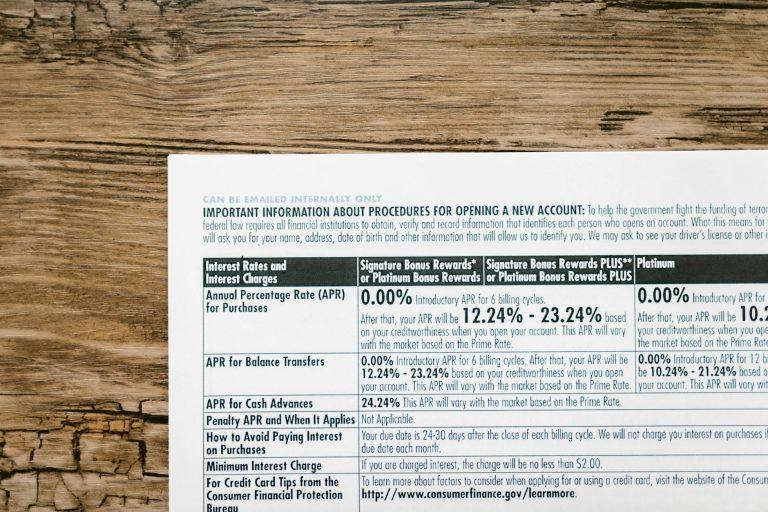
When you’re comparing institutions, don’t just look at the advertised APY. You have to check the fine print on fees. Some banks might offer a seemingly great rate, but they penalize you if your balance drops below $5,000, or they charge you $5 just to initiate an external transfer. I once found an offer that promised 5%, but when I dug in, they required you to set up direct deposit of your entire paycheck, which I wasn’t prepared to do. Read the fee schedule; it’s boring, but it saves you headaches later, sort of like reading the terms and conditions on a credit card agreement, which Investopedia warns often hide surprises.
You might also run into tiered accounts. This structure means you only earn the top-tier rate if your balance is incredibly high—like over $100,000—or conversely, you might earn less if your balance is too low. For the average person building an emergency fund, sticking to a simple, flat-rate HYSA is usually the most straightforward path. The key is finding transparency; I was frankly surprised how often I had to hunt through three different menus on one bank’s website just to find the legitimate interest rate disclosure. Check out what others are saying about bank reliability on forums like NerdWallet’s community discussions before committing a large sum.
The interest rates fluctuate based on the Federal Reserve’s actions, obviously, so that 4.5% you see today might be 3.8% six months from now, requiring you to constantly monitor the market. While moving balances between different HYSAs isn’t as easy as it should be, remember that even a lower rate is still infinitely better than earning nothing while inflation eats away at your purchasing power. Honestly, worrying about moving $20,000 every time a bank drops its rate by 0.25% is a form of financial self-flagellation that doesn’t truly optimize happiness.