
Penalty-Free Savings Options: Flexible Accounts with Competitive Rate Returns
I remember pulling my savings out of that old brick-and-mortar bank a few years back; the interest rate was pathetic, something like zero-point-oh-one percent. It felt like I was actively losing money because inflation just ate it alive. You shouldn’t have to sacrifice access to your cash just because you want it to actually grow a little bit. That’s where penalty-free savings options come into play, offering that sweet spot between liquidity and decent returns.
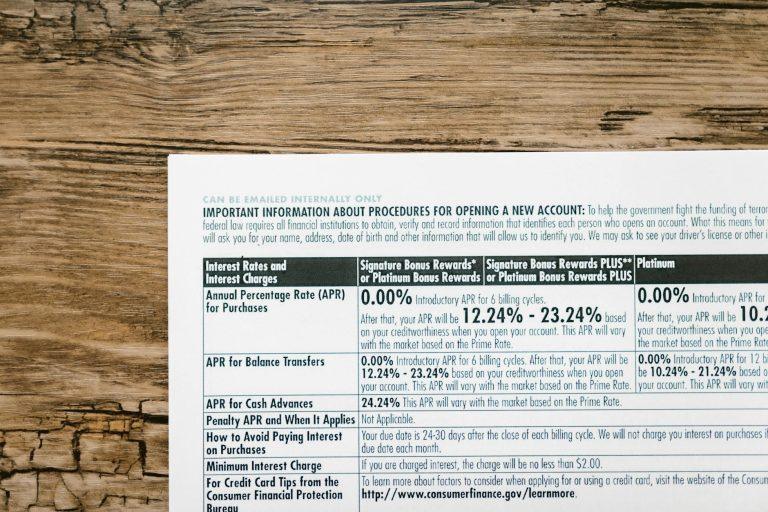
These aren’t your old-school savings accounts. We’re talking about High-Yield Savings Accounts (HYSAs), primarily offered by online banks where they don’t have the overhead of massive branch networks, so they can pass those savings directly to you as higher interest. You’ll frequently see annual percentage yields (APYs) that are ten to twenty times higher than what the big national chains are offering right now. Seriously, check out the current national average savings rate—it’s frankly embarrassing compared to what you can snag online.
You might think, “There has to be a catch, right?” Usually, the catch with other accounts is the early withdrawal penalty, but that’s exactly what we’re avoiding here. HYSAs are structured like regular savings accounts, meaning the FDIC insures your funds up to two hundred fifty thousand dollars, and you can transfer that money out whenever you need it—whether it’s for that surprise transmission repair on your old Honda Civic or maybe a down payment fund.
Another fantastic player in the penalty-free arena is the Money Market Account (MMA). Think of an MMA as a slightly dressed-up HYSA that sometimes comes with checking features, like the ability to write a few paper checks a month or get a debit card. They often pay very similar, competitive rates to HYSAs, sometimes slightly lower, sometimes slightly higher depending on the bank and the balance tier you maintain. I’ve seen some MMAs requiring minimum deposits upwards of five thousand dollars to hit their top tier, which can be a barrier for some folks just starting out.
A genuine frustration I hit when researching this stuff initially was differentiating between a standard Savings Account and an Online HYSA. Many banks advertise high rates, but if you read the fine print on their standard offering, they peg the rate to the lowest possible tier, meaning you need ten thousand dollars in the account just to breach one percent APY. Always scrutinize the tier structure.
If you’re looking for something even more flexible, certain brokerage accounts offer sweep programs with high yields. Fidelity, for instance, has options where uninvested cash just sits in a high-yielding money market fund, which is entirely penalty-free and accessible instantly if you decide to buy a stock or ETF. This is a savvy move if you already use that brokerage for investments, as it consolidates your banking and investing frictionlessly.
My biggest personal gripe, and this is something people overlook, is the transfer time. While the money is “accessible,” it isn’t instant like it is with money sitting in your checking account at a local credit union. Moving funds from an online HYSA back to your primary checking account often takes one to three business days via ACH transfer. If you have an emergency where you need four thousand dollars right now, waiting those extra forty-eight hours can feel like an eternity, even if you technically could access it if you paid an out-of-network ATM fee or something drastic. You really have to plan for that small lag time. Want to see how different transfer methods stack up? You can get a solid breakdown on the mechanics of basic bank transfers over at Investopedia.
Keep an eye on those promotional rates, too. Some institutions will dangle a ridiculously high APY—maybe five percent—for the first three months, only to drop you back down to zero-point-thirty-five percent afterwards just to lure you in. That’s just bad faith in my book, but it happens constantly. Look for banks advertising rates that are solid and consistent across all balance levels, like those offered by institutions listed by NerdWallet for long-term holding.
The real limitation here, beyond that transfer delay I mentioned, is the utter lack of tax-advantaged status. Unlike a Roth IRA or a 401(k), every single penny you earn in interest from your HYSA is immediately taxable as ordinary income the following tax season, which means your effective rate is always lower than the advertised APY. If you’re earning five grand in interest, you’re paying income tax on all five grand—ouch. For context on how significant that is, the IRS considers nearly all interest income taxable.
So, while penalty-free savings accounts solve the liquidity problem while beating inflation significantly, maybe you should just buy a handful of blue-chip dividend stocks instead and accept the volatility risk.